Building a Strong Core
Running is a core workout in disguise. Every time you run, your abdominal and back muscles work overtime to keep your spine stabilized and your body upright. This improves your core strength translating to better posture throughout the day, helping you stand taller and avoiding slouching.
Increased Flexibility
Tight hamstrings and a stiff back are enemies of good posture. Running stretches and loosens these muscles, allowing for a wider range of motion. Increased flexibility allows your body to move more naturally and efficiently, contributing to better posture.
Body Awareness on the Go
Running like most other physical activities requires good body awareness. You need to be mindful of your form to avoid injury during workouts and maximize your effort. This focus on your body’s position translates to a heightened awareness during everyday activities. Naturally, you’ll start noticing your posture and making adjustments to stand taller and sit straighter.
Weight Management Bonus
Running can help you maintain a healthy weight, which can indirectly improve posture. Excess weight pulls on your joints and muscles, hence slouching. Running helps you avoid this strain and promotes a more natural upright posture by keeping your weight in check.
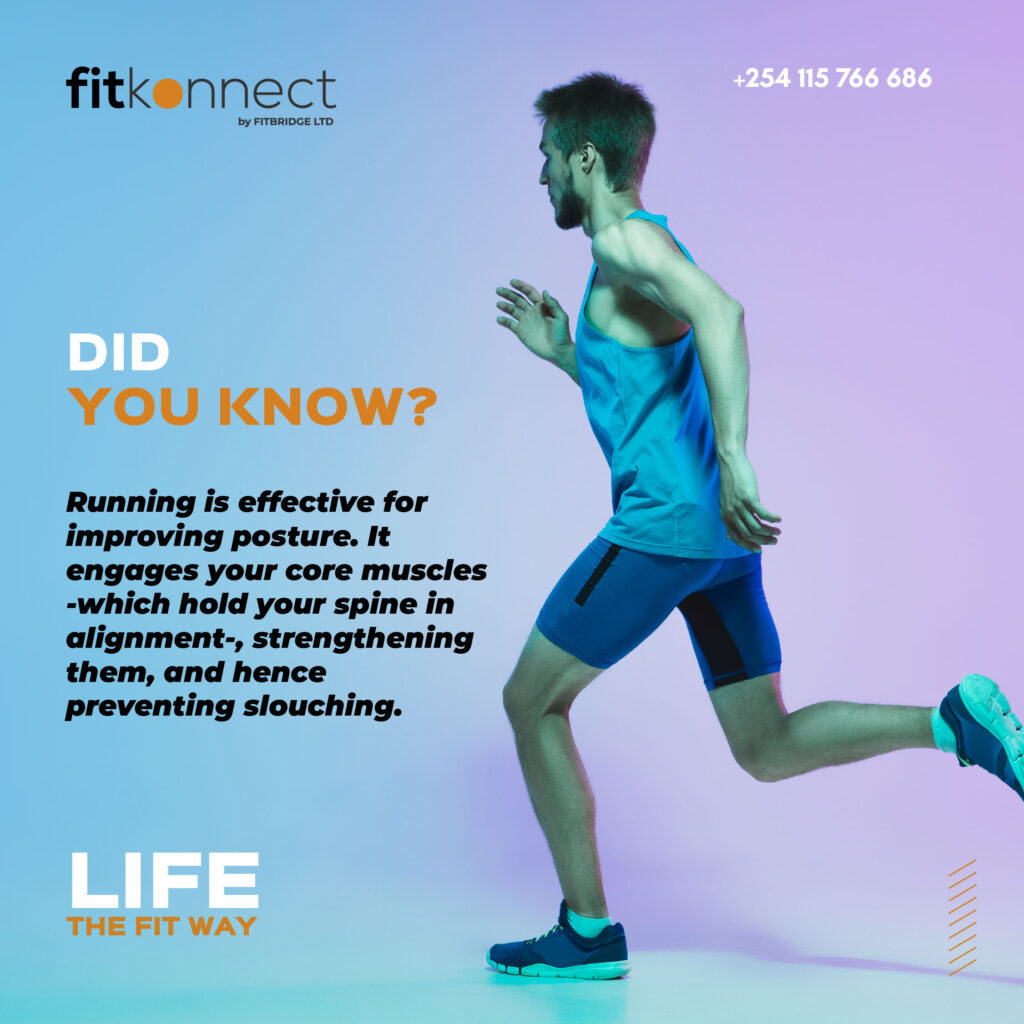
Run Smart, Stand Tall:
Proper running form is key to reaping the posture-improving benefits. Here are some tips:
- Head Up, Eyes Forward: Avoid the downward gaze! Looking down can hunch your shoulders and neck. Keep your head held high and focus on the horizon.
- Straight Spine, Strong Core: Imagine a string pulling you up from the crown of your head. Engage your core muscles to maintain a neutral spine alignment.
- Relaxed Shoulders: Don’t tense up! Keep your shoulders down and relaxed, away from your ears.
- Natural Arm Swing: Let your arms swing freely at your sides. Avoid crossing them in front of your body.
New Runner? Get Guidance:
If you’re just starting your running journey, consider consulting us for a coach or trainer. They can help you develop proper form, ensure you’re running safely, and maximize the posture-improving benefits of running.
Running isn’t the silver bullet for all posture problems, but it is powerful in strengthening your core, improving flexibility, and increasing body awareness – all of which contribute to better posture and a more confident stride.
So lace up your shoes, hit the pavement, and run your way to a taller, healthier you!
If you found this interesting then you might want to read how to stay active at your desk.
We can help you find a coach or trainer near you.
Call +254 115 766 686 or Email: go@fitkonnect.com and we’ll help you out.
]]>In a world that never seems to slow down, running offers an escape from the chaos and a chance to reconnect with your inner self. Picture yourself lacing up your favorite running shoes, stepping out into the crisp morning air, and feeling the pavement beneath your feet. It’s a moment of pure freedom and a powerful reminder of what it means to be alive. Running is not just an activity; it’s an invitation to embrace the boundless power within you.
Strengthen Your Body, Ignite Your Spirit
Let’s get real: running is no walk in the park (pun intended). It’s a full-body workout that ignites your spirit and strengthens your body, one step at a time. With each stride, your muscles engage, your heart pumps, and you can almost feel the energy surging through your veins. Running is not just about reaching the finish line; it’s about discovering the strength and resilience you never knew you had. So, embrace the challenge, push through the discomfort, and watch as your body transforms into a powerhouse of vitality.
Unleash Mental Clarity and Emotional Well-being
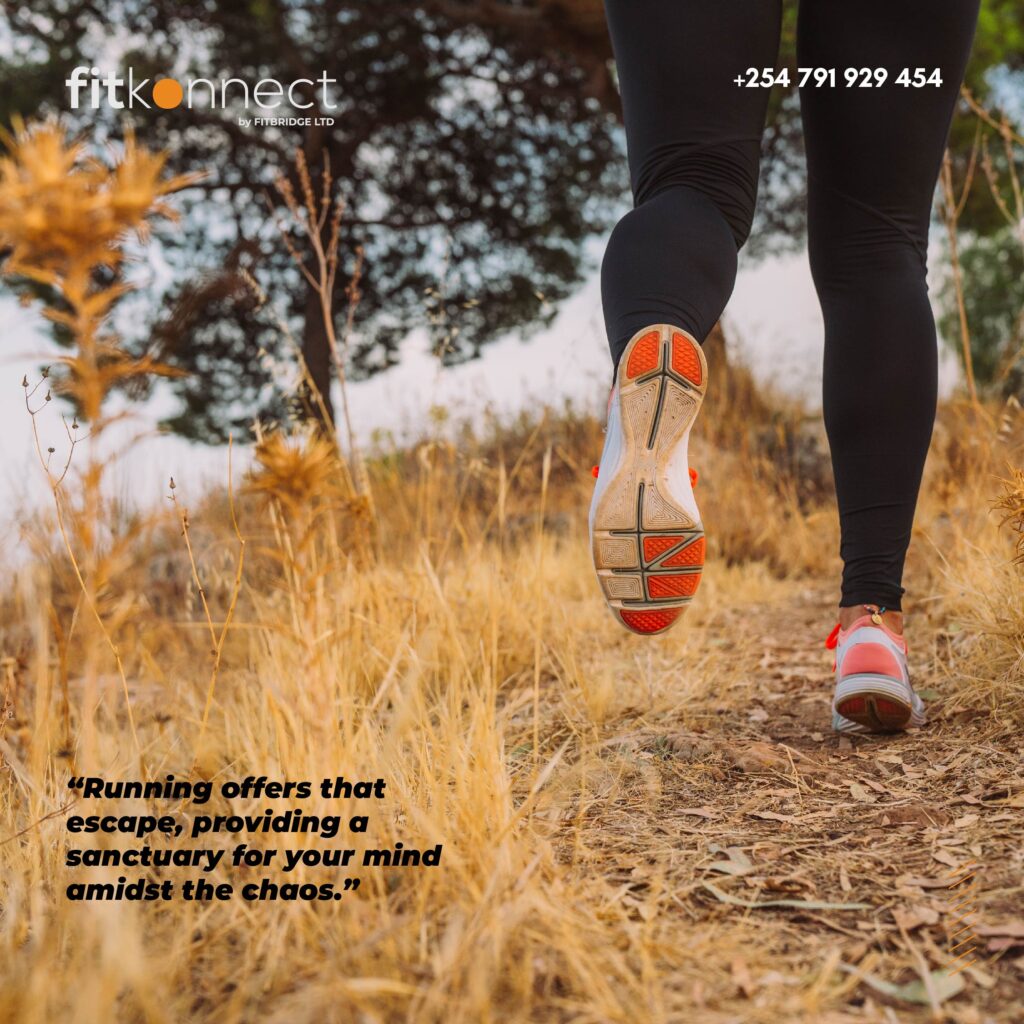
Life can be overwhelming, and sometimes we just need an escape. Running offers that escape, providing a sanctuary for your mind amidst the chaos. It’s like hitting the reset button for your thoughts and emotions. As your feet rhythmically hit the ground, the stress melts away, and a sense of mental clarity emerges. Running allows you to release your worries, immerse yourself in the present moment, and rediscover a deep connection with your inner self. It’s therapy for the soul, a chance to find solace and restore your emotional well-being.
Create Lasting Connections Through Running Communities
Running may seem like a solitary activity, but it has the incredible power to bring people together. Picture joining a local running community, where high-fives, words of encouragement, and shared triumphs become the norm. Running connects people from all walks of life, uniting them through a common love for the outdoors. It’s not just about crossing the finish line; it’s about the friendships forged along the way. So, lace up, find your tribe, and experience the joy of celebrating each other’s accomplishments as you conquer miles together.
Embrace the Journey, Embody the Lifestyle
Running is not just a hobby; it’s a lifestyle that seeps into every aspect of your being. It’s about embracing the journey, celebrating milestones, and constantly striving for personal growth. You don’t have to be the fastest or go the farthest; it’s about showing up and giving it your all. Running becomes a metaphor for life—a constant reminder to push beyond your limits, overcome obstacles, and embrace the joy that comes from living in the present moment. So, tie up your shoes, hit the road, and let running transform not just your body, but your entire outlook on life.

Now, go out there and run for your life—because each stride is a step away from your doctor.
Did you know that laughter is a workout? Read more about this and other fun facts here.
Why is self-motivation important?
Self-motivation empowers you to take control of your fitness journey and, ultimately, your life. It allows you to set your own goals, make choices aligned with your values, and take ownership of your actions. By relying on internal motivation rather than external factors, you become more resilient, self-reliant, and capable of achieving long-term success.
Self-motivation is vital because it provides the drive, determination, and positive mindset needed to maintain a healthy and fulfilling lifestyle. By nurturing and harnessing your motivation, you can unlock your full potential and create lasting positive change in your life.
How to keep the fire burning
If you’re struggling to keep the morale for your next workout, these tips will help you maintain your streak and even make you look forward to your next session.
Set Clear and Meaningful Goals
Motivation thrives when you have a clear vision of what you want to achieve. Take some time to define your goals and make them specific, measurable, attainable, relevant, and time-bound (SMART). Whether it’s running a marathon, losing weight, or gaining strength, having a tangible target in mind will give you something to work towards and keep you focused.

Surround Yourself with Positive Influences
Your environment plays a crucial role in your motivation levels. Surround yourself with like-minded individuals who uplift and support your fitness journey. Join fitness communities, find a workout buddy, or follow inspiring social media accounts. Engaging with positive influences will not only keep you motivated but also provide a sense of camaraderie and accountability.
Celebrate Your Progress
Don’t forget to acknowledge and celebrate your achievements along the way. Recognize the small victories and milestones you reach, whether it’s completing a challenging workout or making healthier food choices. By acknowledging your progress, you reinforce a positive mindset and fuel your motivation to keep pushing forward.
Mix Up Your Routine
Monotony can be a motivation killer. Inject some excitement into your fitness journey by varying your workouts and trying new activities. Explore different fitness classes, outdoor adventures, or sports. Experimenting with new exercises and challenges not only keeps things interesting but also helps you discover hidden strengths and capabilities.
Practise Self-Compassion
Remember, motivation is not a constant high; it fluctuates over time. On days when you feel demotivated or encounter setbacks, be kind to yourself. Instead of beating yourself up, practice self-compassion. Remind yourself of how far you’ve come and focus on the journey rather than the end result. Embrace self-care activities, such as rest days, meditation, or indulging in a favorite healthy treat, to recharge and replenish your motivation reserves.
Motivation is the driving force behind your fitness journey, and by incorporating these powerful strategies into your routine, you’ll have the tools to keep that flame burning brightly, and maintain the craving for the next work out. Remember to set clear goals, surround yourself with positivity, celebrate your progress, embrace variety, and practice self-compassion. Stay motivated, stay committed, and watch as you transform into the best version of yourself.
A side stitch is a discomfort on one side of your abdomen that is also known as exercise-related temporary abdominal pain (ETAP). It’s more frequent on the right side of the body. Cramping or a dull discomfort may be present, as well as a tugging sensation or a sharp, stabbing pain. The most common cause of a side stitch is extended sports activity. Side stitch sensations may be alleviated by staying hydrated, halting your activities or taking a break to walk, and stretching. Younger athletes are more prone than older competitors to acquire a side stitch. Side stitches, on the other hand, can afflict anyone who exercises for an extended period of time.

Causes Of Side Stitches
A side stitch’s exact cause remains uncertain. According to several research, a side stitch is caused by blood flow to the diaphragm or muscles during physical exertion. Other study suggests that inflammation of the abdominal and pelvic cavity lining may be the cause. When there is a lot of movement and friction in the torso during physical exercise, this discomfort might arise. Athletes frequently complain of shoulder tip soreness with the onset of a side stitch. This might be because inflamed stomach linings can induce localized discomfort in several places, including the point of the shoulder. A side stitch can also be caused by eating a huge meal or consuming sugary sports drinks.
Treating Side Stitches
The following can help reduce pain and resolve side stitches:
- Bend slightly onto the side where the stitch is felt.
- Reach one hand above to stretch your abdominal muscles.
- Stop moving and gently massage your fingers into the afflicted region while bending your body forward slightly.
- Take a deep breath and exhale slowly.
- Take a rest or slow down to a walk if you’re running.
- While exercising, stay hydrated, but avoid sugary sports drinks if they bother your stomach.
While exercising, stay hydrated, but avoid sugary sports drinks if they bother your stomach. A side stitch will normally go within a few minutes or after you stop exercising. However, if your side stitch persists after many hours, even after you’ve stopped exercising, you should seek medical attention. It might be a symptom of a more serious medical problem. If you have acute, stabbing pain along with a fever or swelling on the side of your abdomen, get emergency medical treatment immediately once.
Preventing Side Stitches
Avoid eating large meals or drinking a lot of liquids one to three hours before exercising to avoid a side stitch. Take the following measures as well:
- Maintain a decent posture. Athletes with a rounded spine are more likely to have side sutures.
- Before exercise, stay away from high-fat and high-fiber meals.
- Shorten your workout and increase the intensity instead.
- Before exercising, avoid sugary beverages or any beverages.
- Gradually improve your fitness level.
If you’re a runner, increase your weekly mileage by a few miles. If you’re prone to side stitches, a physiotherapist could be able to assist. If they suspect it’s your technique or posture that’s creating your side stitches, they can examine it.
The Bottom Line
A side stitch affects the majority of athletes, particularly runners and are a regular occurrence especially in endurance events. After you stop exercising, a side stitch should go away in a few minutes. Reduce the time of your workouts if you’re prone to them. If you feel discomfort in your side or abdomen that isn’t connected to exercise, or if you have a side stitch that lasts many hours, tell your doctor and get medical care as it might be a symptom of something more serious.
]]>